
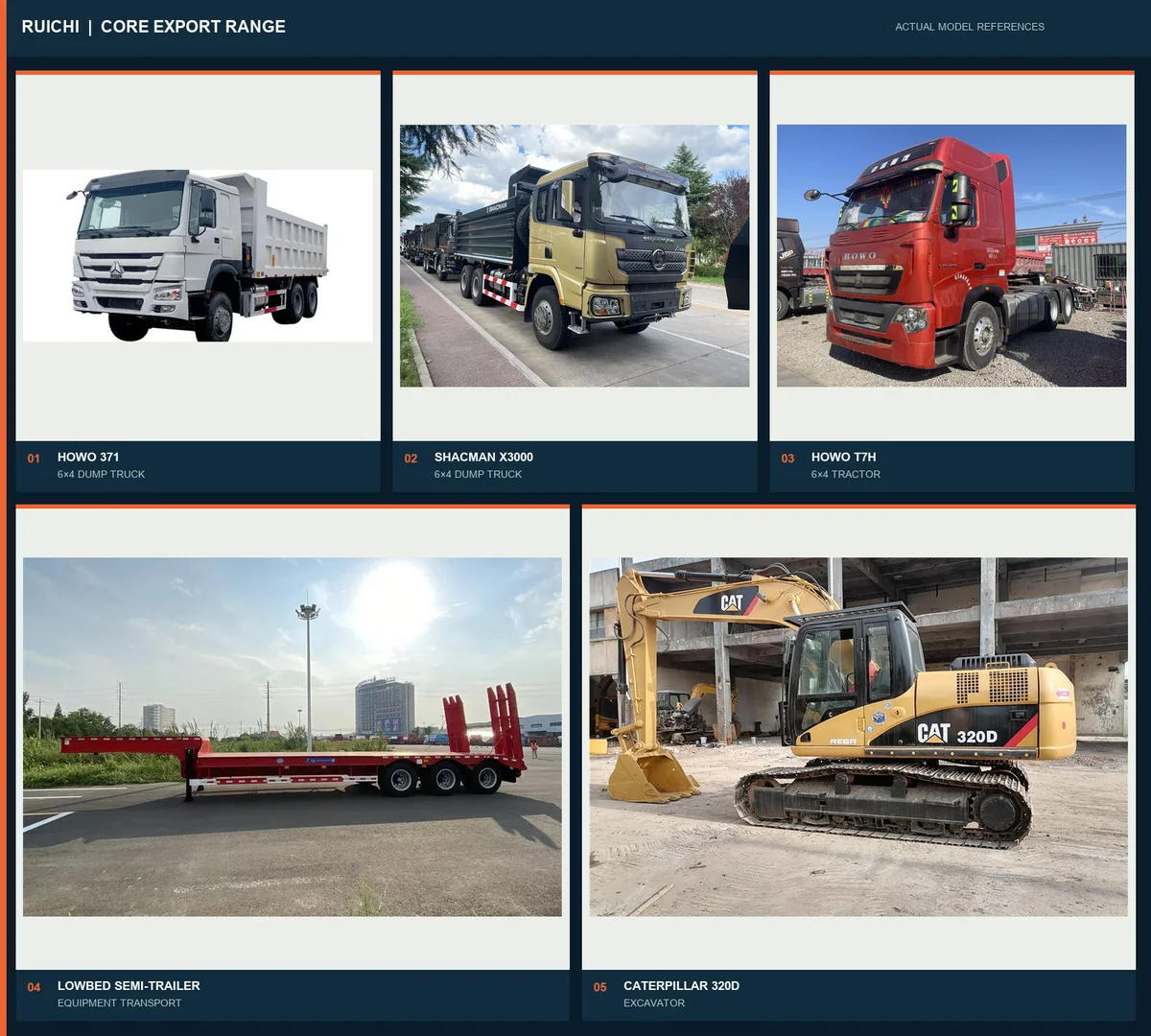
Where 6×4 is usually practical
A 6×4 dump truck is generally shorter and easier to maneuver. It can suit construction sites, urban access and projects where road space or turning radius is limited.
- Lower purchase and operating cost in many configurations
- Better access on tighter sites
- Common parts and familiar maintenance
- Payload must still follow axle and road limits
Where 8×4 can be useful
An 8×4 dump truck can support a larger body and distribute weight across more axles. It is often considered for higher-volume earthwork, quarry and mining applications where site access permits.
- Larger body options
- More axles for weight distribution
- Longer wheelbase and larger turning space
- Higher fuel, tire and maintenance cost
Do not choose by tonnage claims alone
Advertised payload is not automatically the legal road payload. The final choice depends on chassis rating, body weight, tires, road conditions and destination regulations. For severe off-road work, traction and cooling can matter more than body volume.
Information needed for a correct recommendation
Send the material type, loading method, one-way distance, road gradient, surface condition, legal axle limits and desired daily output. This lets the supplier recommend a configuration instead of simply quoting the largest truck.