
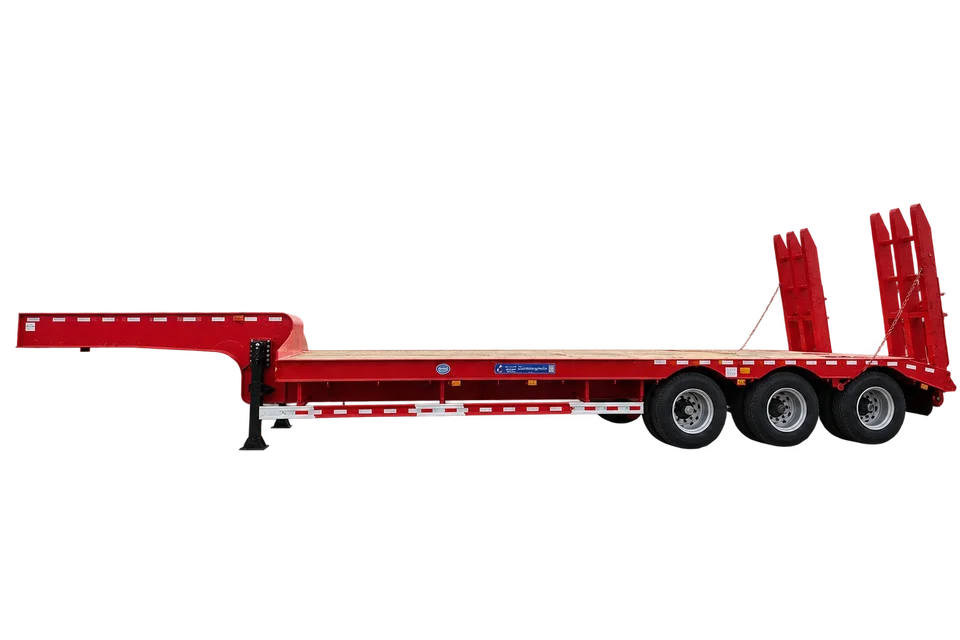
Start with the machine in its transport configuration
The model name is only a starting point. Send the transport weight and dimensions of the actual machine, including the bucket, blade, counterweight or other attachments that will travel with it. If an attachment will be removed, record its separate weight, dimensions and securing arrangement. Do not use an unrelated brochure configuration as a loading plan.
- Machine model and identification
- Transport length, width, height and weight
- Attachments carried separately or mounted
- Ground clearance and loading method
Require a drawing, not only a tonnage label
Ask the supplier for usable deck dimensions, deck height, ramp layout and the intended loading position. A qualified supplier or engineer should check the distribution of the actual load. The number printed in a trailer advertisement does not prove that a particular machine, loading arrangement or route is suitable.
- Dimensioned deck and ramp drawing
- Axle, suspension and tire specifications
- Lashing points and securing plan
- Compatibility with the intended loading surface
Match the tractor and check the route
Confirm fifth-wheel height, kingpin compatibility, brake connections and electrical connections with the tractor supplier. Ask your destination transport operator to check loaded dimensions, axle and bridge restrictions and any permit requirements for the actual route. This guide does not approve road legality or replace a load assessment.
Lowbed, lowboy or detachable gooseneck: which are you asking for?
Buyers use lowbed, low-loader and lowboy in different markets. Send a side-view drawing or photo with the inquiry so the supplier can see the deck and loading arrangement you mean. A search term alone does not specify the trailer.
A rear-ramp trailer and a detachable-gooseneck trailer load differently. Tell the supplier how the machine will get onto the deck, its ground clearance and the space at the loading site. Compare the actual design, not two offers that happen to use the same product name.
Why can two lowbed trailer prices be far apart?
First check that both suppliers are quoting the same drawing. Usable deck length and width, axle and suspension specification, tires, ramps and included fittings can change the offer. Ask each supplier to mark optional items rather than hiding them inside a single price.
Next compare shipping. An assembled trailer and a stacked or partly dismantled trailer are not the same delivery. Ask who pays for unloading and reassembly, and what checks are needed before use. A cheaper sea-freight line can leave more work at your end.
Compare delivery in the same assembled condition
One offer may cover an assembled trailer while another assumes stacking or dismantling. Put packing, lifting, unloading, reassembly and acceptance responsibilities in writing. A low freight figure is not a like-for-like saving if the buyer must arrange additional work at destination.
- Trailer build price and optional equipment
- Packing and shipping arrangement
- Freight and insurance if included in the chosen term
- Excluded port, clearance, tax and inland-delivery costs
- Who performs and checks reassembly
Send a complete request for a matched proposal
Send the machine information, tractor details, destination port, final work location and quantity with your request. Ask for a dated proposal identifying the drawing revision and quoted components. Current production status, cost and delivery timing must be confirmed for the order; catalog photographs are configuration references, not proof of a completed trailer.